
Rule of thumb, then the exceptions
If you can lift your garage door by hand, look it over and listen to it once a season, you'll catch most problems before they strand you. The exceptions: homes right off the water or anywhere salt air reaches should check more often, since salt accelerates rust on tracks and hardware. And after any stretch of heavy storms or high humidity, it's worth a quick look even if it's not "time" yet — swelling, swollen wood jambs, and grit blown into the tracks don't wait for a schedule.
Tools you'll need
- Work gloves and a flashlight
- A rag and a soft brush or shop vacuum
- Silicone-based garage door lubricant (not WD-40 or grease, which attract grit)
- A socket wrench or nut driver
- A 2x4 or similar board for the safety sensor test
The 20-minute routine
- Look at the tracks. Run your flashlight along both vertical and horizontal tracks. You're checking for rust spots, dents, and gaps where the track has pulled away from the wall. Coastal salt air causes surface rust faster than most homeowners expect, even on doors just a few years old.
- Wipe down and clear debris. Afternoon downpours push leaves, sand, and grit into the tracks and rollers. A quick wipe with a rag and a pass with a brush or vacuum keeps that debris from grinding into the rollers every time the door cycles.
- Tighten visible hardware. Using your socket wrench, snug up the bolts on the track brackets and roller hinges. Humidity causes wood and metal to expand and contract, which works fasteners loose over time. Do not touch anything connected to the spring itself.
- Lubricate the moving parts. Spray silicone lubricant on the rollers, hinges, and the track itself (a thin coat, not a soak). This is especially important here because humidity and salt air both speed up corrosion on unprotected metal.
- Check the weatherstripping and bottom seal. Look for cracking, flattening, or swelling along the bottom rubber seal and the side weatherstripping. UV exposure and heat break this material down faster in Florida than in milder climates, and a failed seal lets in water during storms.
- Test the balance. Disconnect the opener by pulling the manual release cord, then lift the door by hand about halfway. A properly balanced door stays put. If it drifts up or crashes down, the spring tension is off.
- Test the auto-reverse safety sensors. Close the door and place your board in the path of the photo-eye sensors near the floor. The door should reverse immediately on contact. If it doesn't, stop using the opener until this is fixed.
- Run a full cycle and listen. Open and close the door once while standing clear, listening for grinding, popping, or scraping. Unusual noise almost always points to a problem that's easier to fix now than after it gets worse.
- Check the opener's battery backup. If your opener has one, confirm it still holds a charge. During hurricane season power outages, a working battery backup is often the only way to get a vehicle out of the garage.
What's safe to do yourself
Everything above — inspecting, cleaning, lubricating, tightening visible hardware, and testing the sensors and balance — is within reach for most homeowners with basic tools and twenty minutes.
What needs a technician
Stop and call for help if you notice any of the following:
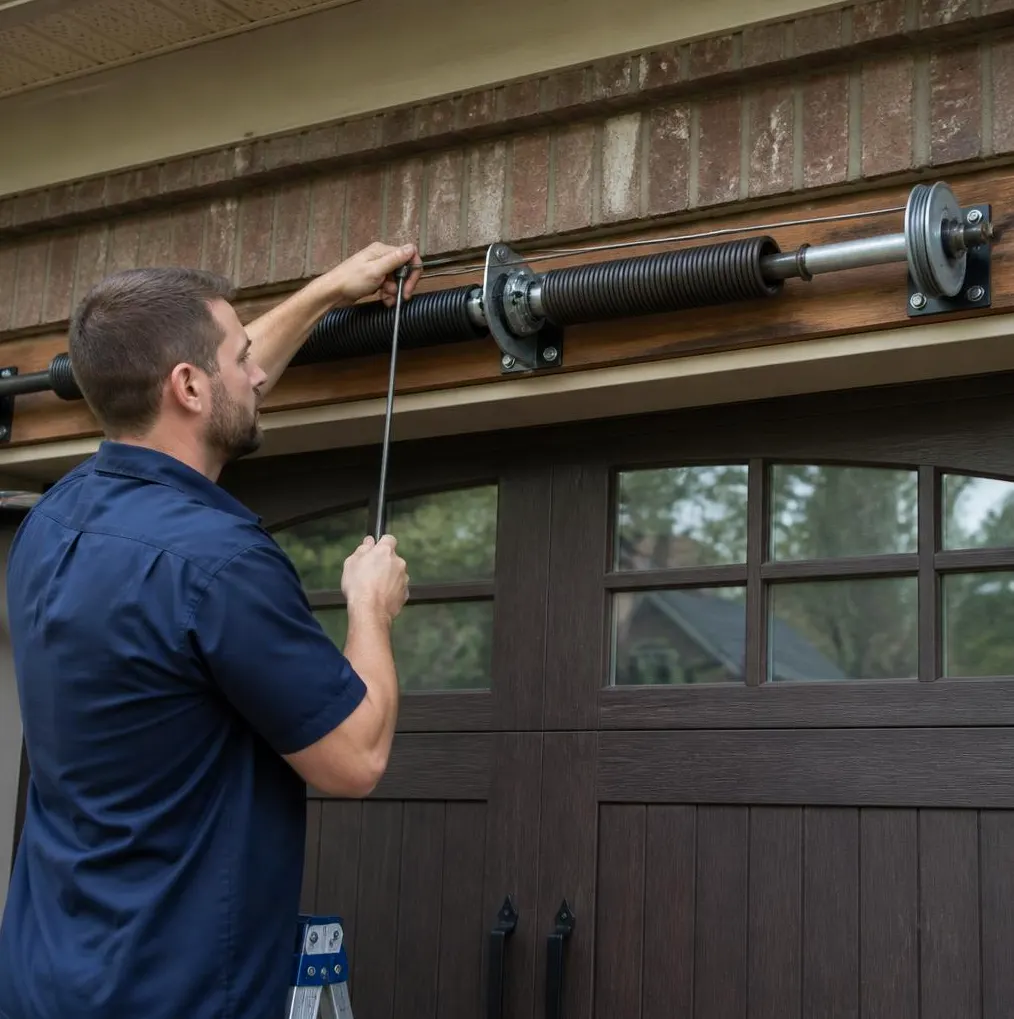
- The door doesn't stay balanced when lifted by hand (this means spring tension needs adjusting, and torsion springs are under enough force to cause serious injury)
- Visible fraying or rust on the lift cables
- The door is off track or the track itself is bent or pulled away from the frame
- The auto-reverse sensors fail the board test
- Persistent grinding or popping that doesn't go away after lubrication
When to call Precision Garage Door of Panama City
If your seasonal check turns up a door that won't balance, cables that look worn, or a track that's bent from salt-air corrosion or storm debris, that's where our technicians take over. Our Garage Door Maintenance & Tune-Up service covers a full inspection and adjustment of springs, cables, and hardware, and our Off Track Door Repair gets a door back on its rails safely without risking damage to the opener or frame. We work throughout Panama City, Panama City Beach, Lynn Haven, Springfield, Callaway, Parker, Cedar Grove, and Upper Grand Lagoon, and we show up on time with the parts most trucks already carry.
If your twenty-minute check raised any red flags, call Precision Garage Door of Panama City today and let a local technician handle the rest.